False Edges
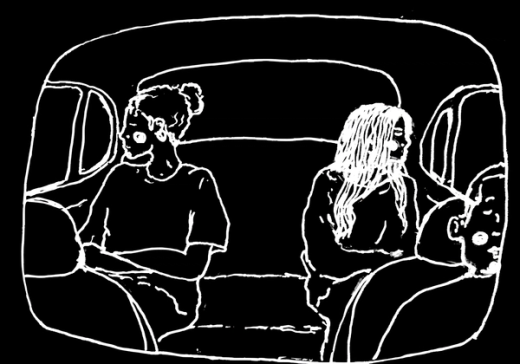
June in Calabar was better than June in Lagos. Not only did the rain disappear into the drainage once the skies cleared, but here, Etta could think. While in the passenger seat in the airport taxi bound to move any minute, he thought about the sous chef with a silver beard he’d kissed in that restaurant’s bathroom after a work function. He’d done a line of coke off the man’s chest. Only to ask him out weeks later and have his heart crushed by the gold ring the man retrieved from his pocket.
Etta winced and kept looking outside the window. Ferns all around. Ugly ixoras. People in groups rolling luggage. Taxis parked next to other taxis, their drivers sitting on low blocks under the terminal’s colossal awning, chatting and shelling boiled groundnuts between banter, waiting to hustle the next set of luggage-bearing returnees coming through the entrance.
The taxi got into motion, and once it made it to the highway, they zoomed past overgrown lawns, deserted verandas, leafless flame trees, and nothing else worth committing to memory. The taxi’s windows were wound up. Not so much to keep out the rain as the cold. He needed a cigarette. Asked the driver if he had one. No, the man nodded, and tried to make small talk. Etta asked him to turn up the radio instead. The man did so with a scowl. There was now rain and the voice of a newscaster between them. This put Etta at ease. He wanted the city to be as he’d left it. At the airport terminal, a staff had, in a few words and many gestures, asked him for some cash. It reminded him of the airport at Lagos.
He’d asked for the cigarette to pre-empt the driver demanding anything of him. He wanted the city as he’d left it. Unchallenged indifference was one of the few charms this city offered. Why ruin that privilege to be an anonymous back-in-towner with mindless chatter about all the events that’d led him, against his wishes, to this moment?
He wanted Calabar—the city and the people—to behave differently.
He coughed and folded a fist to catch it. He’d been coughing all through the flight. It left him a small headache. The cold must’ve gotten to his ribs.
After Lagos recovered from the April fires that brought down three of its skyscrapers—two banks and a casino—in June, the forsaken city made headlines again, even internationally, of being overrun with flash floods. Fancy cars in parking lots remained buried from tyre to sunroof. Canoes and speedboats spawned in the city’s nooks. While the city wept, the art curator he’d been dating for six months used the excuse of not being able to leave his flooded high-rise one morning to receive head from his new art supplier from Beijing.
Etta had thrown up in the sink after he watched the video an unknown number forwarded to him. Six months of bliss followed by a tidal wave. In the video, his partner kept making faces for the camera. It could’ve been an old video. So he texted the number. And the number replied with another video with his partner on the phone and Etta’s voice on speaker in the background. He blocked the number and deleted his partner’s contact.
He wept to sleep that night. He felt stupid and small. His head began to ache. The whole fiasco reminded him why he never really trusted love in Lagos. Ill-fated desire remained the city’s metronome, and the ethics governing those desires seemed a misguided requirement to request. Labels were a bother. The fucking always, always surpassed the loving. Even his friends in finance urged him to lodge his heart in a bell jar and slip it under his bed, and emerge onto the city for what it offered best: euphoria. He insisted on his obstinance. He dreamt a big dream instead. Of people being people next to people, but reality stole all the colours from such dreaming, and he was left with tear-soaked throw pillows and empty bottles of Bordeaux.
He had to move. He needed a place with peace and pines to continue creating the menus for the restaurant he’d always dreamed of opening. To the island, he thought, but on a whim, he took a flight back to the city he’d left after uni to do big things with big people who flew private jets to private islands for fun. In the two years he’d stayed in Lag, he’d turned to gin to gut the grief, and, in his sober moments, he moonlighted as an usher, a bartender, and an event promoter to put himself through culinary school. Now a certified chef, he’d already worked in three separate kitchens. Made enough money to afford the poisons that defanged his pain. But work made him lose sleep, and the sleep made him lose his hold on reality. The distance he tried to maintain between ambition and grief, with cocktails, shrooms, and molly, only brought him into the beds of strangers and the parked cars of pastors who sought God in his perineum. None of it emptied out the emptiness. Home, he hoped, would be the antidote to the hell of other places.
*
The streets were bereft of people. The few folks he saw held umbrellas. Those without umbrellas huddled under drenched trees, flagging down minibuses. The rest gossiped under the eaves of kiosks. Calabar crawled. Maybe he’d love it here. This slowness might settle the riot in him.
“Oga, shey you talk State Housing?”
“Yes, but you fit stop for pharmacy fes?”
“Pharmacy? Which one?”
“Any one.”
“You wan buy something for that your cough, ba?”
Etta pointed to the radio. The driver hissed, turning the knob until the taxi was a concert hall. Etta glared at him until he turned it back down. Soon, only the patter of rain filled the vehicle.
Etta wanted to giggle too. He didn’t want to get bored in Calabar.
The driver parked a small distance from a flame tree at Bez Pharmacy. Etta said he’ll return in five. The man put off the engine and stewed in the rain.
The pharmacy was among a complex of malls, bridal shops, and hairdressing saloons. Nothing remarkable about each, except how unremarkable they all were. Etta crossed the gutter, moved to the counter, waited his turn. There were so many sick persons. In suits and caftans. Holding umbrellas. A pallor in their faces. Backs sloped into the iron bench, a little boy with his head tilted towards the small fan above. A young, clean-shaven man with a rook piercing sauntered in his direction. Etta followed the man’s languid motion until he stood in front of him.
“I need something for cough and cold.”
“When did it start?”
“When I was in Lagos. Yesterday—”
Did Etta hallucinate a smirk on the man’s face?
“Are you visiting?” The man tore a piece of paper and began scribbling.
“No, I just moved here.”
“Oh. I give you three weeks, then.”
“What?”
“No one this handsome moves from Lagos and stays. You’ll be bored.”
“You’re a handsome man here. Are you bored?”
“I didn’t move here from Lagos.”
“I will consult you for how to escape boredom, then.”
Etta wanted to stop talking. He wanted to put the man’s smile away. He wanted to steel himself for a minute, take the drugs, get into the cab, and go to the apartment his friend had secured for him at State Housing. But he stared at the man instead as he pulled a syrup from one shelf and fingered a tablet from a blister pack. The man took a call where he complained about not knowing what to cook with just crayfish and rice. He said he might order food on his way back. Etta observed his other colleagues attending to the other patients. None of them seemed incensed by him taking a call in the middle of such a surge of customers. If anything, the young man pointed two other colleagues to attend to two other patients whose faces had grown grim and sour. What if he owned the place? At that age? That would make his trip here all the more pertinent because, then, he could treat this retreat as reconnaissance for a reason to move back here fully. While the man was still on the call, Etta gestured for the pen.
“Can I?”
Etta signalled for the paper the pharmacist had been writing the prescription on. Apprehensive at first, the man eventually slipped the paper to him, and Etta scribbled on the bottom a recipe for crayfish rice: ground crayfish, chopped red onion, seasoning, and goat meat, or fish or fried plantain to garnish. He wrote down the steps to follow: what came before what, and what came after what. Even though everyone seemed more friendly than he’d remembered, this wasn’t about him bypassing the unchallenged indifference of this city. He was just being kind. Kind to a handsome man in a drugstore while it rained.
“What’s this?” The man picked up the paper and studied it.
“I was going to order shawarma, but I might just make this. Is it good at all sef?”
“It’s like coconut rice without coconut milk.”
“Why didn’t you write something more elaborate… Oh, you overheard my—”
Etta nodded. The taxi man honked. Etta took the drugs and waved the man with the rook piercing goodbye. He thought of asking for his number. He seemed fun: a co-worker, a fair woman in scrubs, tugged at the man’s blouse, and he made a face that made her giggle. Etta wanted to giggle too. He didn’t want to get bored in Calabar. He moved to the taxi. Shut the door and cursed at his own cowardice.
That evening, after dinner, when he took out the syrup and the drug in the blister pack, he saw, written after the dose, the pharmacist’s number and his name scribbled under: Basil.
*
Etta nursed a negroni. He wasn’t a mojito man. He didn’t fancy daiquiris either. He preferred cocktails that stung. Acquired the taste after one too many nights bartending on the side. Negronis had become so popular when a famous actor mentioned it in an interview that was turned into a meme. Etta had refused to order them during that period. And just as he continued to pray for the death of dice-styled cameras on smartphones, he waited for the fad to fade. Now that the cocktail had gone out of fashion, there was nothing better to order on a night like this in this little, snug bar.
He pulled smoke from the cigarette in his mouth and blew. He stirred the ice in his drink. Licked his finger. In the bar were two other men who sat at separate tables, one attending a virtual meeting, the other playing Jenga by himself. Etta had already met his landlord, a man in his late fifties who wore clogs and spoke with a vehemence and a drawl against tithes and Pentecostal churches. He settled in rather quickly. Shoved his boxes into the corner. Took his shaving cream and shaving stick and went to work. He loved the terrazzo floor. It reminded him of the teaching hospital in town his parents had taken him to when he’d come down with a flu when he was ten. If he were to find potted plants and someone to sell him a cat, he might consider fully moving here.
He’d called the number a mere ten minutes after he’d spotted it. He hesitated at first to interrogate his motive. He’d need new friends here. Someone to visit the new library in town with, to taste, in cafés and bars, the food on the menu he hoped to experiment with for the restaurant he hoped to open after his three- or six-month stay. He’d have loved to invite Basil. But he needed a bar, not a café; he wanted liquor, not dough; and he wanted a place where the light was as dim as a blood moon. Basil had responded to the call with one question: chef? When Etta asked how he knew he was a chef, Basil said he was just making a joke from how they’d met. The conversation grew with innuendo. Etta asked where he could get a good drink away from a crowd, and Basil had suggested Jacaranda House behind Old Ikang, and Etta asked if Basil would love to join him. Etta smiled when Basil asked what time would work best.
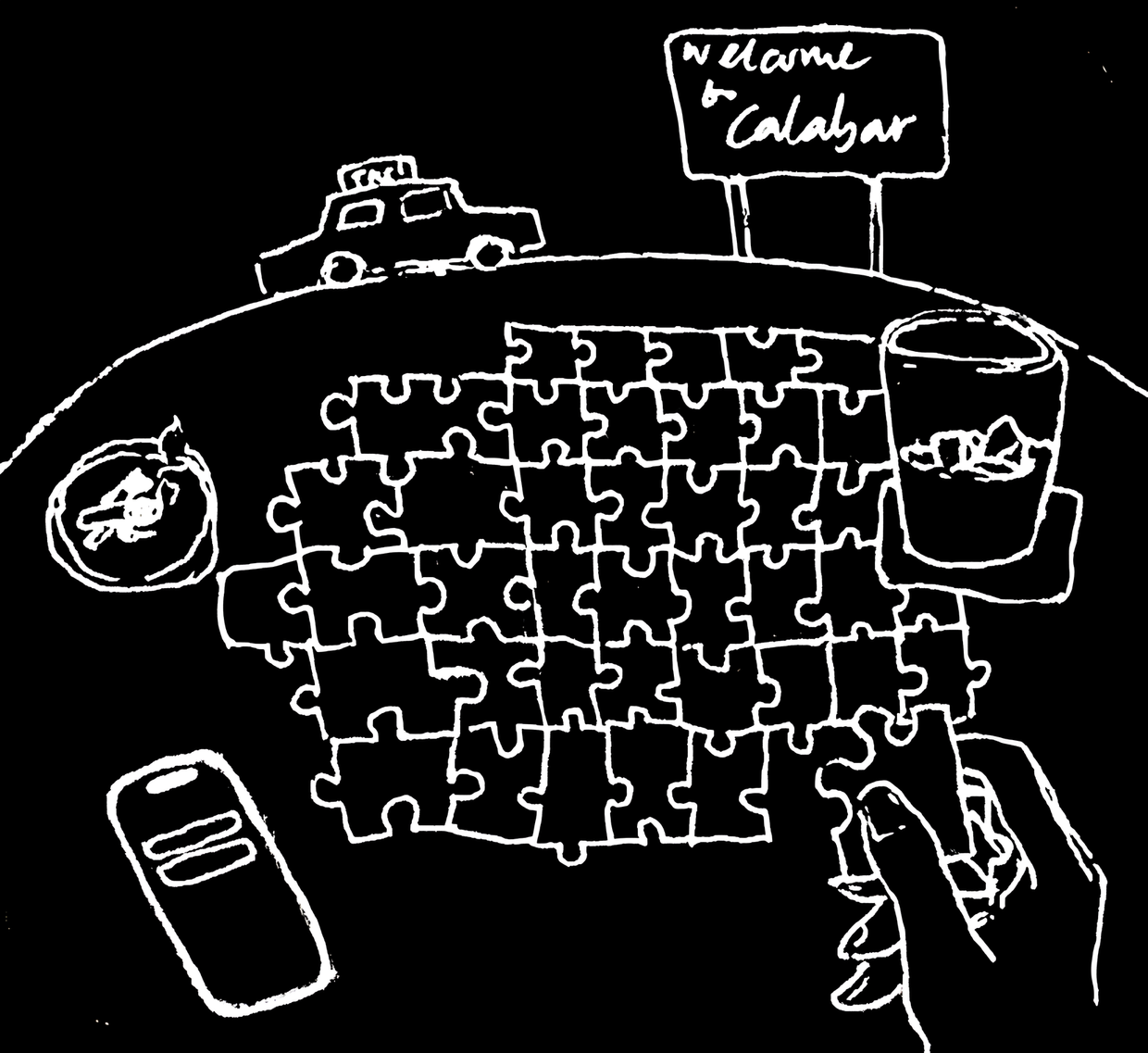
Here he was in a small bar with board games stacked on the side. Upon entry, he’d pulled a puzzle, which he sat solving. A message popped on his phone from Basil. Two images of Basil in two separate tops—a sleeveless crop top and an organza shirt—on the same pair of shorts with the caption: choose. This was forward. Flirty. And almost too soon. Wasn’t that too much trust offered on a whim? Etta stared at the pictures again. At the first one where Basil’s belly button piercing hovered over a thin happy trail. What a gorgeous swirl of wispy hair. He chose that one.
Just then, a call came in from his ex. Etta watched the screen. Watched it until the buzz died. To the flurry of messages the ex shot his way, Etta, heart pounding, hands clammy, simply replied: I’m on a date. He took a selfie and forwarded one of Basil’s pictures, of the sleeveless crop top, to his ex, putting his phone away.
This wasn’t a date. But how would the bastard know that? He didn’t deserve any further divulgence. There was some fizz at the bottom of his heart, a stirring in his belly. Nausea. He always felt this way when he was on the verge of something. Like the night he and his former partner, the one before his art curator cheater, sold out their opening week. Even the first time he kissed a boy in secondary school, he had that fizz. The tremble before desire moved from empty wish to consecrated memory. But he didn’t even know if Basil was gay. One of them.
He’d grown weary of men who met his desire with a frown or quoted the law or clenched a fist. He had no patience either for those who only wanted to meet in hotels: they could have nefarious designs on his body. But no straight man in Nigeria is getting a belly button piercing. No straight man in his right mind and no straight man that’s a pharmacist. A part of him was nervous, then, but not as it would’ve been in Lagos. In Lagos, Basil would have three partners: two exes he hadn’t moved on from yet, and an ongoing affair with a third whom he’d call a friend from college, which was the exact situation he’d been in towards the end of his service year. Calabar had dignity. Lust didn’t run amok here. If this could be the start of something, he would thank the Lord and argue in favour of tithes to his landlord to keep his own blood busy all through the night.
Etta shook his head as he remembered how he’d quit his job as a line cook to come up with a menu for his own restaurant because his then-partner had promised to fund him through the hiatus. They’d met at a bar, where the handsome man tipped Etta so much it seemed as though he was paying for Etta’s attention, rather than the drinks. They got to talking. And laughing. And gifting. And fucking. And dating.
Meeting his partner had steadied him. Put the blues back in the sky. He stood as a buttress against Etta’s despair and as a bridge towards his long-nursed dream. But he’d been careless with Etta’s heart and, as such, had invited, without ceremony, the past Etta had managed to pause. Men are full of promises they can’t keep. It’s nothing new. It’s nothing new.
Etta picked two false edges from the jigsaw puzzle and turned them in the light. He tried to find where they fit in the overall sprawl that was supposed to piece together a castle. While he held it to the light, Basil walked in, arm-in-arm with another man.
“Etta, meet my partner, Faith.”
He looked at his drink, only to find that the ice had fully melted.
Buy Mismemories Here.
About the Writer
Abasi-Maenyin Esebre is a queer writer who writes about the queer experience in Calabar, Nigeria. His essays, short stories, and interviews have been published in AFREADA, Sevhage, AlitFest, Gratia, Akpata, Ekondo Review, Equity Net Ghana etc. He runs The Rich Writer’s Manifesto, a blog where he reviews books, films, and writes social commentary on contemporary Nigerian culture. He’s currently querying his debut manuscript, a queer political mystery, and you can find him on ‘X’ @abasimaenyinn.